How much does a website cost UK businesses? A simple site you build yourself on a website builder costs about £150 to £600 a year in platform fees. A professionally built website is priced on the days of work it needs, and UK WordPress freelancers charge a median of about £413 a day. After launch you also pay for hosting, a domain and someone to keep the site updated, which is where most of the long-term cost sits.
The longer answer depends on what the site has to do for you. A five-page brochure site and an event supplier’s catalogue with quote forms are very different jobs, and the price follows the work.
Typical website costs in the UK at a glance
There are three ways to get a website, and each has a different cost of a website in the UK. You can build it yourself on a builder, hire a freelancer or agency to build it, or have a team build it and look after it monthly.
| Route | What it costs | Best for |
|---|---|---|
| DIY website builder | A monthly or yearly platform fee, plus your own time | A small, simple site you’re happy to build and run yourself |
| Freelancer or agency build | A one-off price for the build, then hosting and updates on top | A custom website with forms, a catalogue or bookings |
| Build plus a monthly plan | A fixed quote for the build, then one monthly price for hosting, updates and changes | Teams with no developer who want the site kept working |
None of these is right for everyone. If your website brings in work, the build price matters less than what happens in the year after launch, when forms break, plugins need updating and the next show season needs new pages.
What a DIY website builder costs
On a website builder you pay a subscription and do the design and setup yourself. When I checked the UK pricing pages on 19 November 2026, Squarespace started at £12 a month paid yearly for Basic, which adds a 2% fee on online store sales, and £17 a month for Core, which has no store transaction fee. Shopify started at £19 a month paid yearly for Basic, with online card rates from 2% + 25p, and £49 a month for Grow.
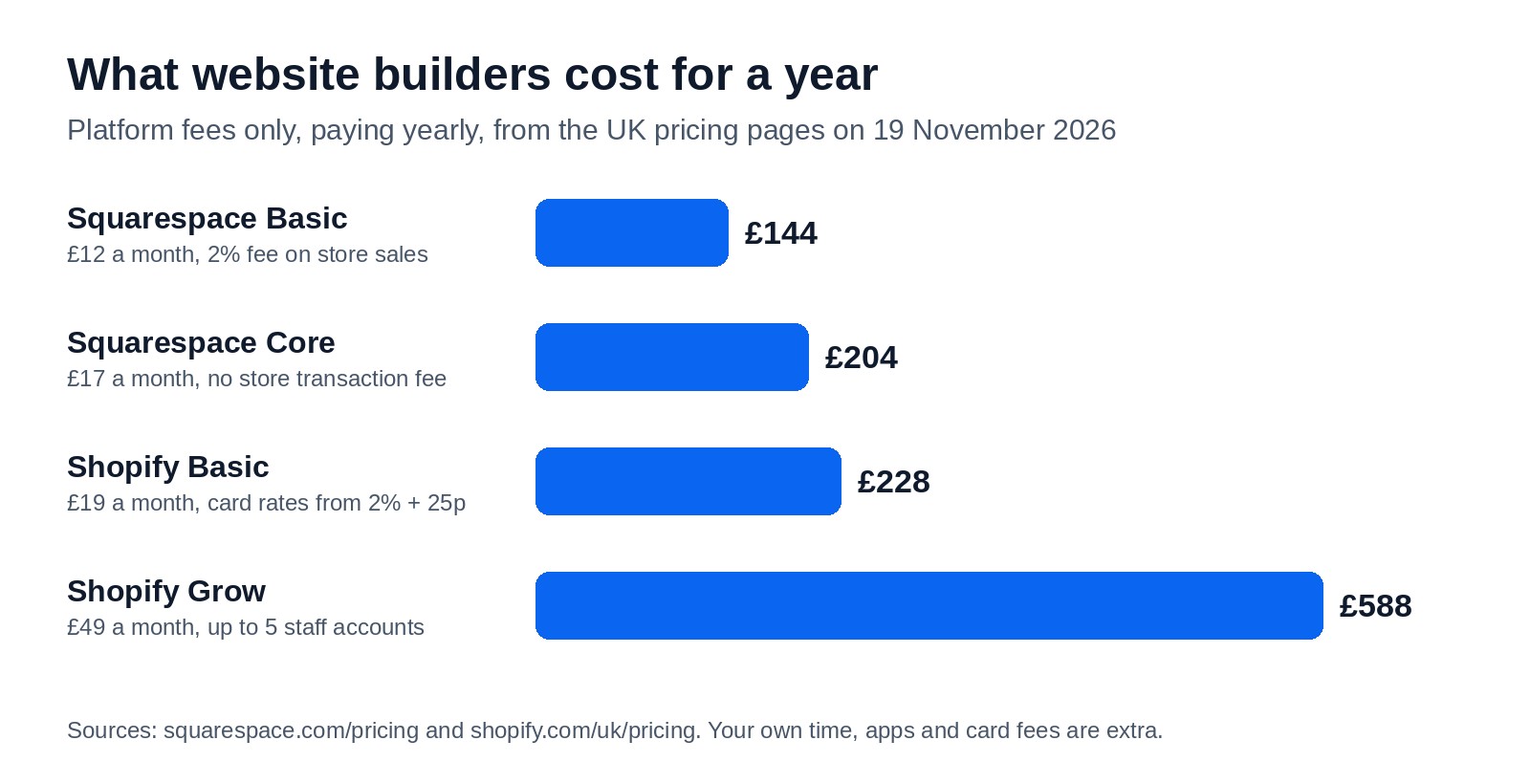
So the platform fee for a small business website on a builder is roughly £144 to £588 a year. That’s the cheapest route on paper, but it isn’t free. Your own time is the real cost, and so are the paid apps, templates and card fees that a shop or booking form adds. A builder works well for a simple site. It gets harder when you need a quote form that reaches your CRM, a product catalogue with sizes and lead times, or pages that change every week before an event.
What a professional web design and development project costs
A professionally built website costs the number of days of work it needs multiplied by the day rate of whoever builds it. There’s no reliable official average for website design prices in the UK, because a small business website and an ecommerce site with integrations are completely different projects.
What you can measure is the rate. According to ITJobsWatch, the median day rate for UK contract jobs citing WordPress was £413 in the six months to 19 November 2026. The middle half of rates ran from £350 to £525 a day. It’s a small sample of 29 quoted rates, so treat it as a guide rather than a price list.
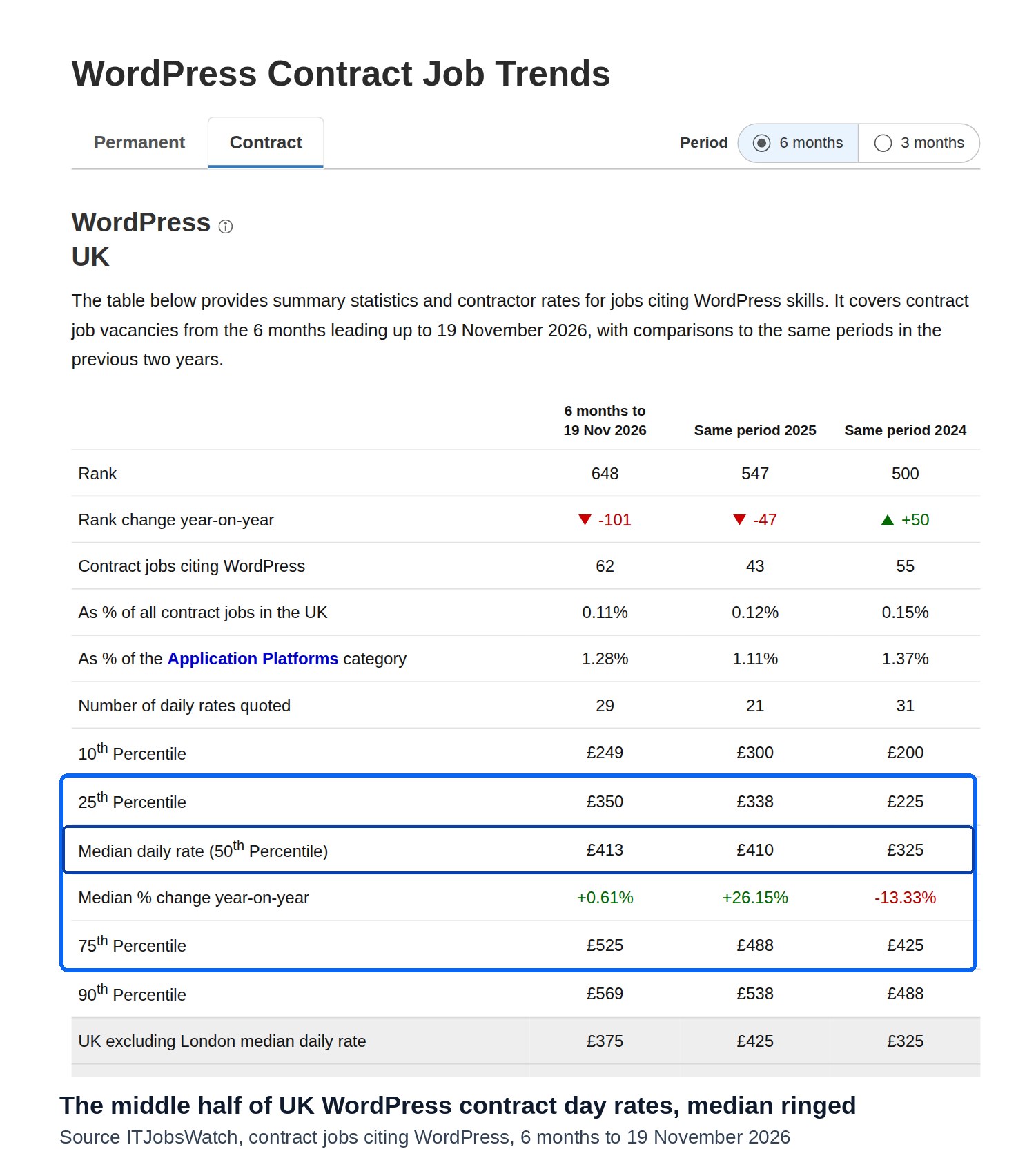
That rate makes any quote easier to read. As an example of the maths, a build quoted at 10 days of work at £413 a day comes to £4,130. A quote that looks cheap for the job usually means fewer days, a template with little custom work, or costs that turn up later. A professional quote should list what’s included, so you can compare like with like.
Freelancer vs agency
A freelancer is usually cheaper per day, and an agency usually costs more because the price covers a team. With a good freelancer you get one person who knows your site well. The risk is that nobody else does, so holidays, illness or a full diary leave you waiting. With an agency or a web team you pay for cover, a range of skills and someone still there after launch. Ask either one who will update the site in a year’s time, because that answer decides more of your total cost than the day rate.
Factors that affect the cost of a website
The main factor in the cost of a website is what it has to do. Every page layout, form, integration and product adds days, and days are what you pay for.
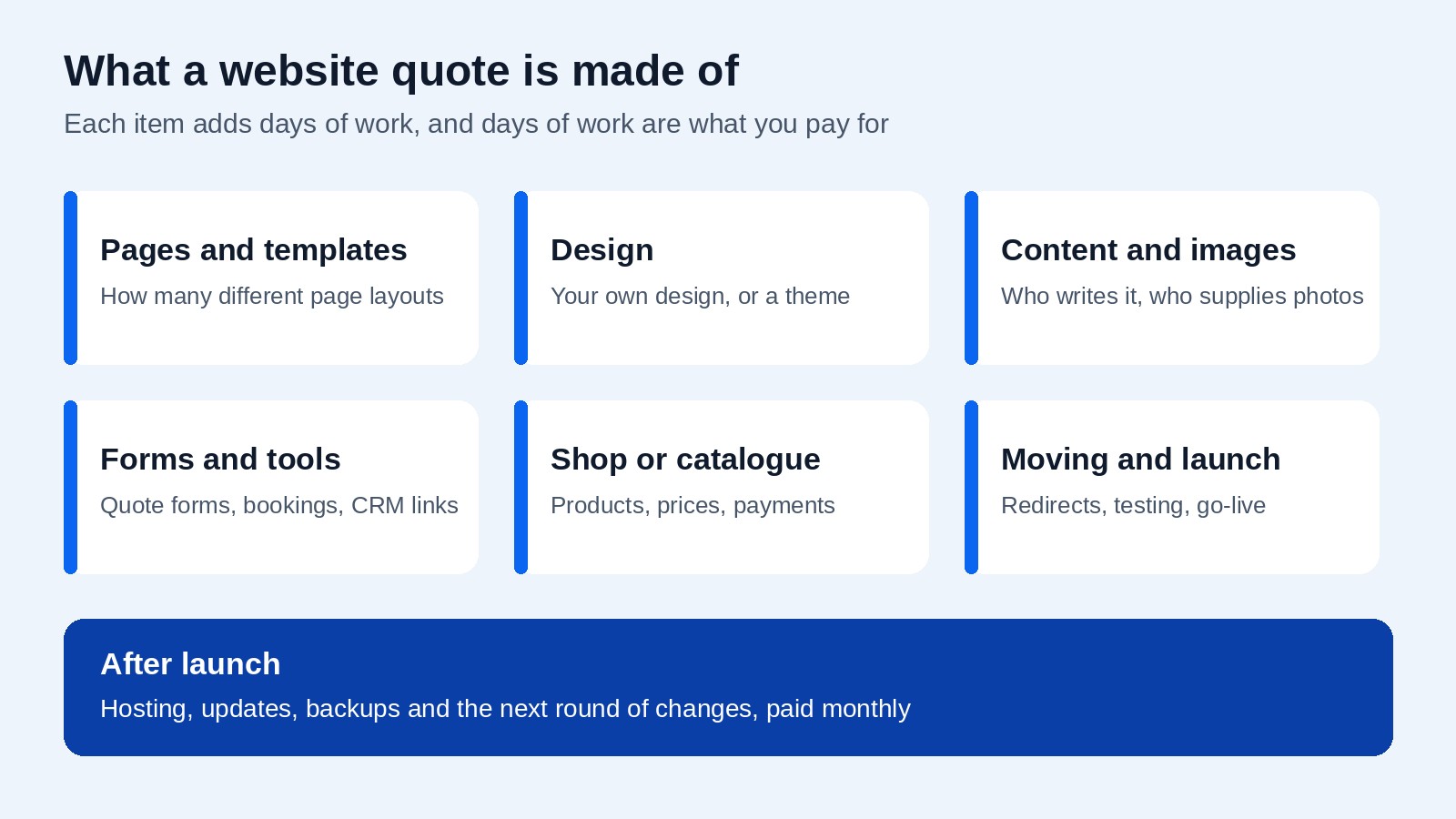
- Pages and templates. Ten pages that share two layouts cost less than five pages that each need their own design.
- Design. A custom design around your brand takes longer than adapting a theme, but it’s built for your content rather than someone else’s.
- Content and images. If you supply the words and photos, the job is quicker. If the developer has to write copy or source images, it adds time.
- Forms and tools. Quote forms, bookings and connections to your CRM or email platform take building and testing, so leads arrive and nothing goes missing.
- Shop or catalogue. An ecommerce website with stock, variations, prices and payments is a bigger build than a brochure site.
- Moving and launch. Redirects from old URLs, testing on phones and checking tracking protect the traffic and SEO you already have.
For event suppliers the usual cost drivers are the catalogue, the quote forms and the deadlines. A hire or stand catalogue with sizes, lead times and a quote button on every product is real development work. So is a site that has to cope with a rush of visitors when bookings open, which needs hosting that scales rather than the cheapest shared hosting.
Domain, hosting and other ongoing costs
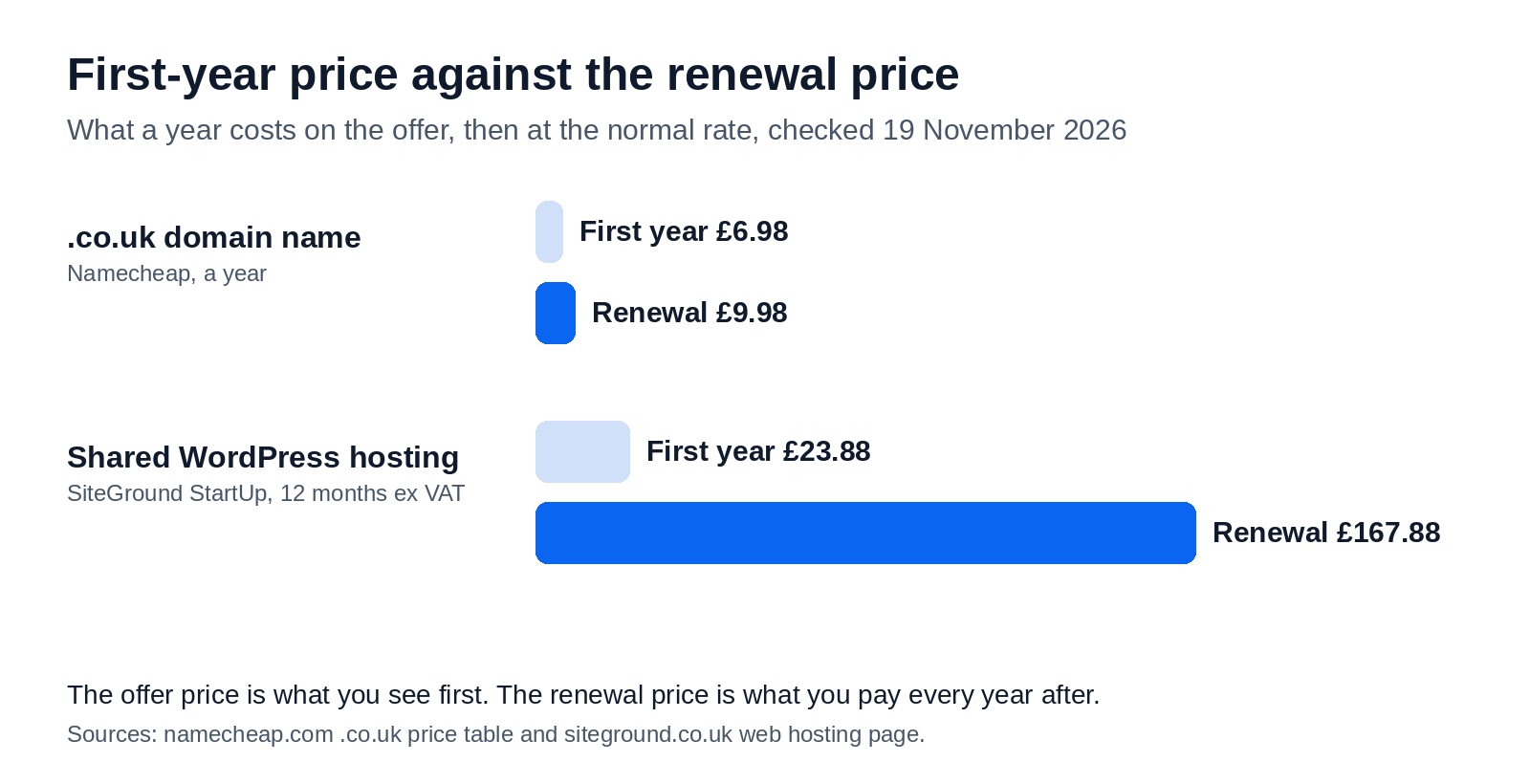
Running costs are the domain, hosting, email and any paid plugins, and they carry on every year after the build. Most of them are small, but the first-year price is often a discount that ends at renewal.
A .co.uk domain on Namecheap was £6.98 for the first year and £9.98 a year to renew when I checked. Shared WordPress hosting on SiteGround’s StartUp package was £1.99 a month for the first 12 months, then renews at £13.99 a month, both ex VAT. That’s £23.88 in year one and £167.88 a year after.
There are a few other running costs to budget for.
- Business email. Google Workspace Business Starter was £5.90 per user a month on an annual commitment, before tax.
- The software itself. WordPress is free to download and use. The cost comes from premium themes and plugins, which are usually yearly licences.
- The security certificate. Let’s Encrypt issues the certificate behind the padlock for free, and most hosts set it up for you.
Cheap hosting is fine for a hobby site. For a business website that takes enquiries, the lower price comes with bigger risks, like downtime, slow pages that hurt performance in Google, and no one to call when something technical breaks.
Maintenance and support after launch
Maintenance is the ongoing cost that most budgets forget. WordPress, your theme and your plugins all need regular updates, backups need checking, and forms need testing so enquiries keep arriving. Either someone on your team does it, or you hire someone to.
Our website maintenance plans cost £150, £350 or £750 a month plus VAT. Each one includes hosting for most sites, daily backups, security updates, hack repair and small fixes, so for most websites the monthly price is the whole running cost apart from email. The plans run month to month, you can cancel any time and there’s no exit fee.
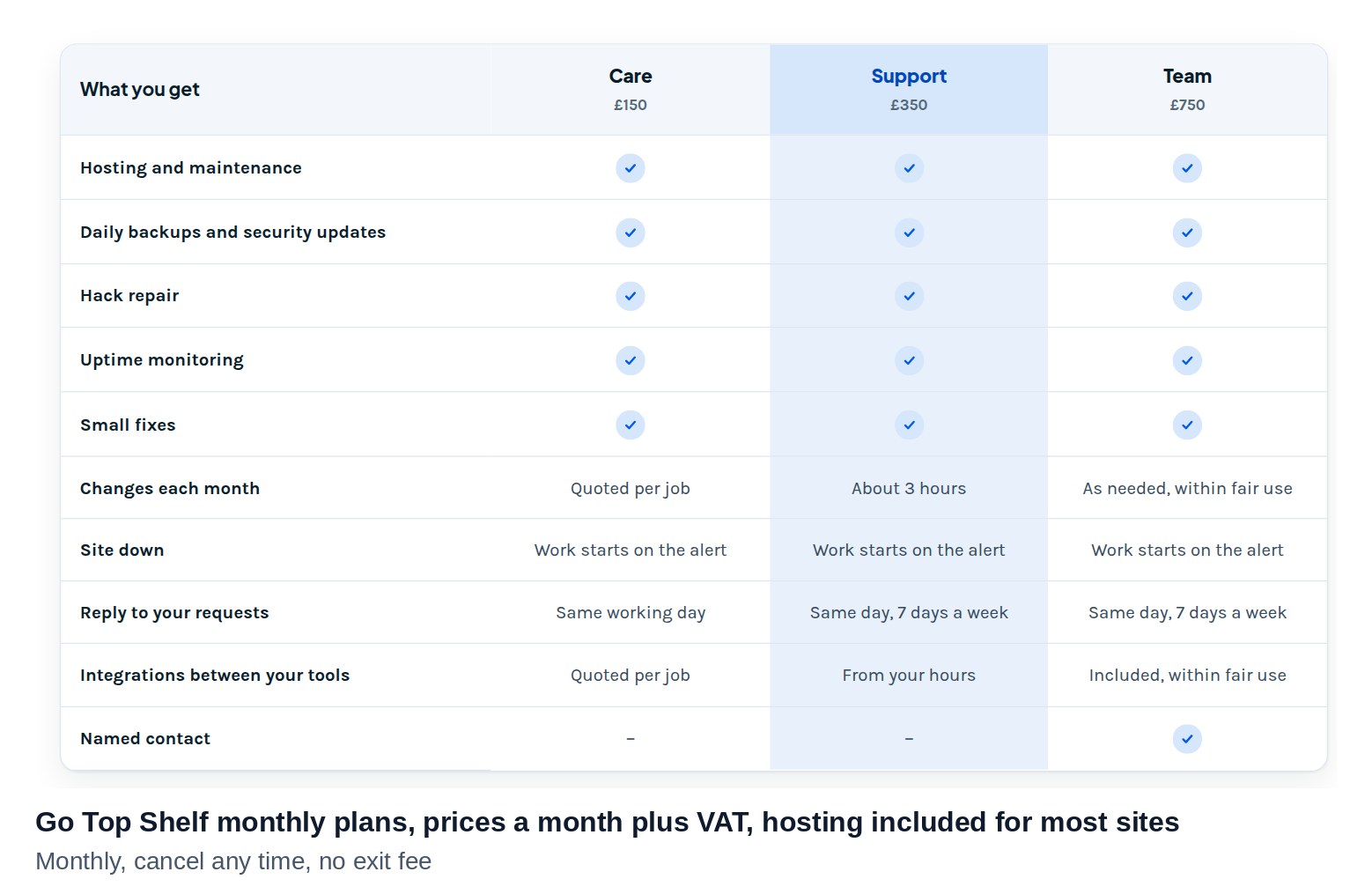
If you have a marketing or events team but no developer, this is usually where the money is best spent. A site that looks great at launch and then goes a year without updates costs more to fix later. If your current site is tired rather than broken, a website redesign may be cheaper than starting again.
How much should a website cost in the UK for your business
How much a website should cost in the UK depends on what it brings in. Work out what one new customer, order or booking is worth to you, then compare that with the build and running costs over two or three years rather than the launch price alone.
- If the site is a simple online presence and you’re happy to edit it yourself, a website builder at £144 to £588 a year is a sensible start.
- If the site takes quote requests, orders or bookings, budget for a professional build priced in days, plus hosting and maintenance every month.
- If you have no one to apply updates or make changes, choose a build that comes with monthly support, so the same people who built it keep it working.
- If you sell into events, plan the build around your show calendar, so the site isn’t launching in your busiest weeks.
Before you ask for quotes, list the pages, forms, tools and products you need, plus your deadline. A clear brief gets you comparable prices, and it stops a cheap quote turning into an expensive one halfway through.
How long does it take to build a website
A small business website with a handful of pages can be live in a few weeks once the content is ready. Bigger builds with a catalogue, a shop or several integrations take longer, and the timing depends on when the content is ready as well as on the build itself.
If you have an event date or a launch to hit, say so at the start. With our web design services you get a fixed quote with the pages, features and dates agreed before work starts, and we’ll tell you straight away what can be built in time. You can see where that leads in the E&F Safety case study, where monthly Google clicks grew by 1,254% in a year.
Frequently asked questions
How much does a website cost per month?
On a website builder it’s about £12 to £49 a month in platform fees on UK yearly billing. A self-managed WordPress site can cost under £20 a month for hosting and a domain, plus your time to keep it updated and secure. With all of that handled for you, our plans start at £150 a month plus VAT.
What is the average cost of website design for a small business in the UK?
There isn’t a reliable official average, because small business websites range from a few pages to full online shops. The more useful figure is the day rate. UK WordPress contract rates had a median of £413 a day in the six months to 19 November 2026, so ask how many days a quote covers.
Is it cheaper to build a website yourself?
It’s cheaper in cash and dearer in time. A builder subscription costs from about £144 a year, but you design, write, test and update everything yourself. That suits a simple site. For a site that takes enquiries or orders, a mistake that loses leads usually costs more than having it built properly.
How much does a .co.uk domain cost?
Usually under £10 a year. Namecheap charged £6.98 for the first year and £9.98 a year to renew when I checked on 19 November 2026. Some builders and hosts include a free domain for the first year, then charge their standard rate, so check the renewal price before you register.
What ongoing costs does a website have?
Hosting, the domain, business email, premium plugin licences and maintenance. Hosting and the domain are often discounted in year one and cost more at renewal. Maintenance covers updates, backups, security and fixes, and it’s the cost most people leave out of their website budget.
If you already have a website and want to know what it needs before you spend anything, get a free website audit. We’ll check your site, forms, speed and search visibility and send you a clear report within one working day.